Active Lifestyle
Movement and the Midday Meal: A Record of Parallel Patterns
Tobias Marsden
·
·
11 min read
London, 14 February 2026 — Over the course of seven weeks beginning in early January, a running tally of vegetable portions at each meal occasion was kept alongside a record of cooking method, approximate weight, and whether the meal was prepared at home or consumed outside the domestic setting. The results did not confirm any prior expectation. They did, however, surface a set of patterns worth examining.
The record covered breakfast, midday, evening, and any additional eating occasion that involved a significant vegetable component. Beverages, condiments, and incidental garnishes were excluded. Each entry noted the primary vegetable or vegetables by name, the rough preparation method (raw, roasted, steamed, sauteed, blended), and an approximate portion size in standard tablespoons — not because tablespoons are a precise measurement unit, but because they are a consistent one that is achievable without scales at every meal.
What emerged fairly quickly was that the measurement itself altered awareness without altering intention. The act of noting a portion — even approximately — shifted the eye toward the plate before the fork reached it. Whether this shift had any downstream effect on the quantities consumed is beyond the scope of this record. But the observation is worth noting: food journalling, even in its most minimal form, appears to introduce a moment of pause between preparation and consumption.
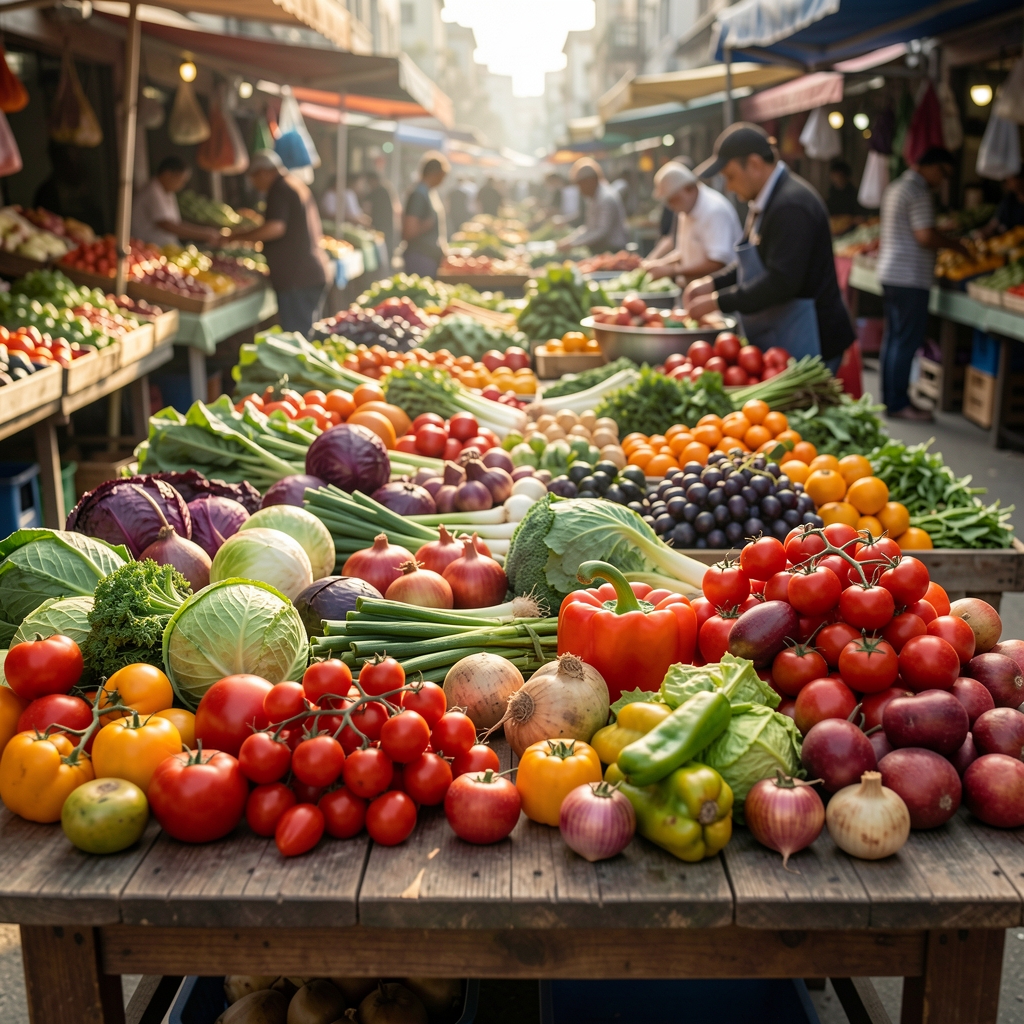
Seven weeks is a short span. It covers one month of winter and the beginning of the shift into late winter, when the produce available at the Exmouth Market stalls transitions from the deep storage roots of December toward the early spring brassicas — purple sprouting broccoli, forced rhubarb, the first signs of greens that have not spent months in a cold store. These seasonal shifts matter for the record because they are not neutral. They change what is available, what is purchased, what ends up cooked.
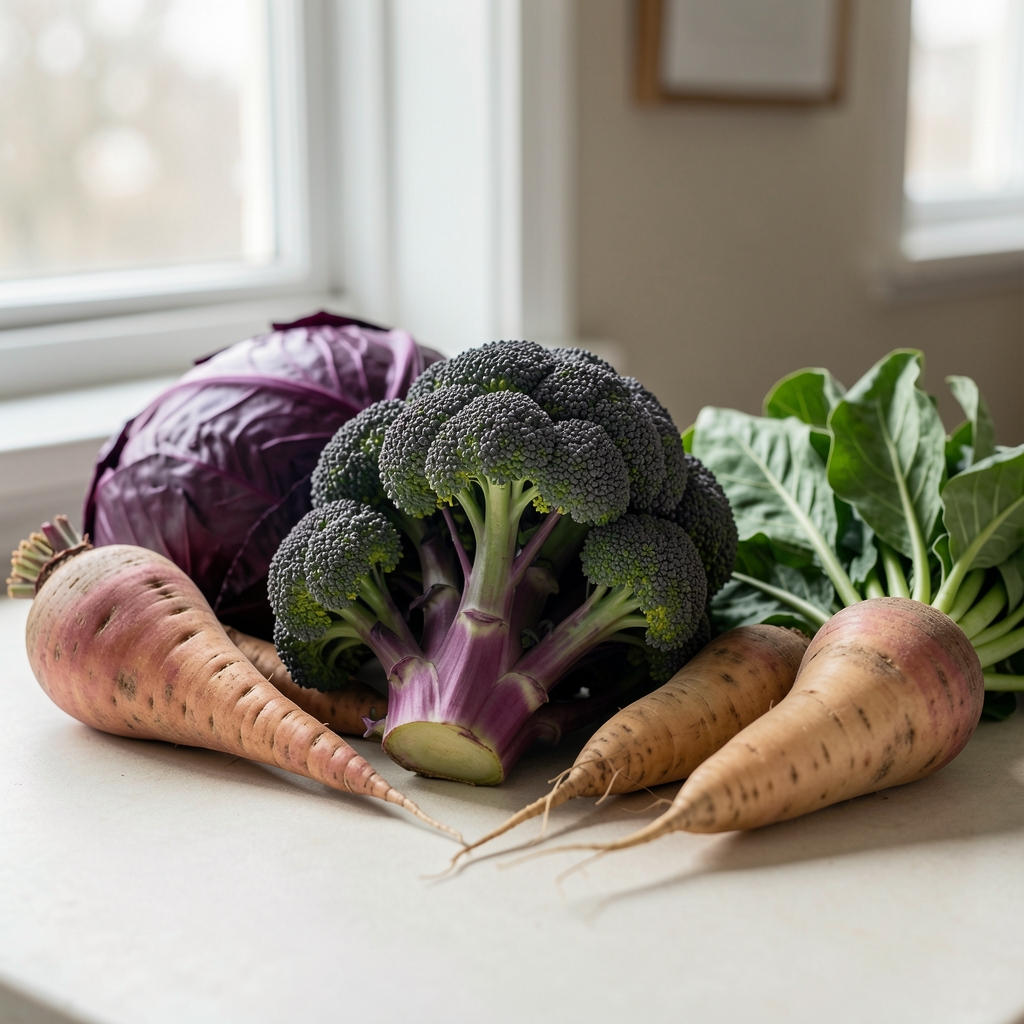
Fig. 01 — Winter to late-winter produce, January 2026
The most consistent pattern in the seven-week record was the day-of-week variation in total vegetable portions. Weekday averages clustered around three to four tablespoon-equivalent portions across the day, with the midday meal accounting for the largest single contribution when a home-prepared lunch was possible. Weekends showed markedly different patterns — Saturday records averaged nearly double the weekday figure, while Sunday totals dropped back to weekday levels or below.
The Saturday anomaly appeared to correspond with market visits. On Saturday mornings when the Exmouth Market or a similar nearby market was attended, the subsequent meals of that day contained more varied and greater quantities of vegetables. The act of selecting produce in a physical market setting, with direct sensory engagement with the items before purchase, seems to influence what ends up on the plate within the same day — not dramatically, but consistently.
This was not a designed experiment. It is a retrospective observation drawn from a simple record. No controls were in place, no comparison group existed. The observation that Saturday market visits correlated with higher vegetable portions that day could reflect any number of confounding factors — more time at home, a different cooking register on weekends, the presence of others at table. The record alone cannot distinguish between these. It can only report the association.
"The act of noting a portion — even approximately — shifted the eye toward the plate before the fork reached it."
Eleanor Whitfield — Field Notes, January 2026
A secondary pattern that the record surfaced was the relationship between cooking method and the apparent portion size on the plate. Roasted vegetables — particularly root vegetables and brassicas exposed to high heat — reduce considerably in volume. A raw portion of kale or spinach that would occupy a substantial surface area on the plate reduces to a fraction of that volume when wilted or sauteed. By contrast, raw preparations — salads, slaws, and unprepared vegetable components — occupied more visual space on the plate per unit of actual weight.
This matters for the record because portion awareness, if it is visual rather than weight-based, is tracking a different variable depending on preparation. The tablespoon measure attempted to normalise for this — a tablespoon of roasted carrots and a tablespoon of raw carrot batons have comparable weight despite occupying different visual spaces — but the approximation is imperfect.
The practical implication, if there is one, is modest: raw preparations may support a greater visual sense of abundance on the plate without necessarily delivering more by weight or nutritional content. Whether that visual abundance is meaningful for the eating experience is a separate question that this record is not equipped to answer.
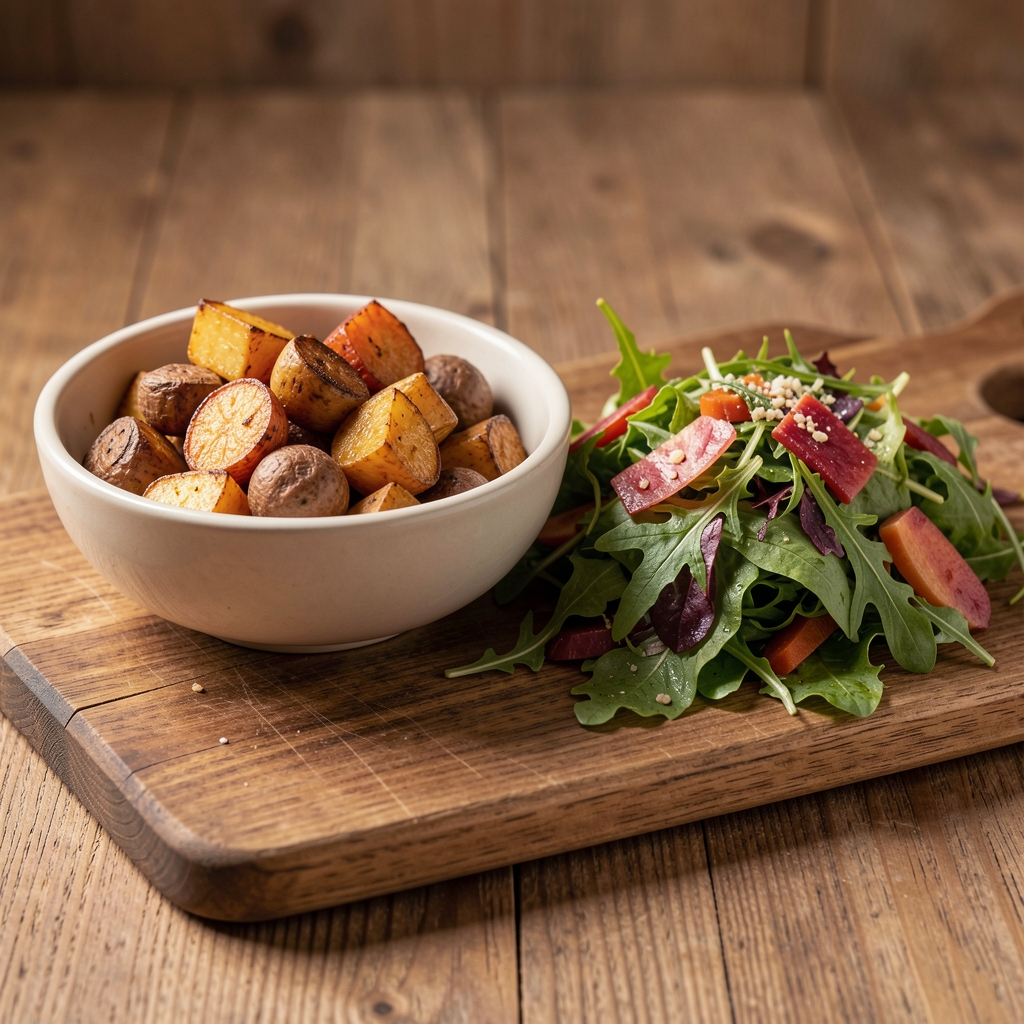
Fig. 02 — Roasted versus raw: same weight, different visual volume
Meal occasions outside the home accounted for roughly a quarter of all recorded eating occasions across the seven weeks. These included lunches in the EC1 area, a small number of evening meals, and several occasions where prepared food was brought back to the workspace. The vegetable content of these outside-home occasions was, on average, noticeably lower than home-prepared equivalents.
This is not a surprising finding. It aligns with what nutritional research has consistently observed about the relationship between home cooking and dietary variety. What the personal record added to this general observation was a sense of the specific occasions where the gap was largest. Workplace lunches of the quick-service type — a sandwich, a ready-prepared bowl — typically delivered one or two small vegetable elements at best. Evening meals at sit-down restaurants in the area delivered considerably more, often in the form of side dishes that could be ordered alongside a main.
The practical note here, for anyone maintaining a similar record, is that the outside-home category is not monolithic. The difference between a quick desk lunch and an unhurried evening meal is substantial in terms of vegetable contribution. Tracking these separately, rather than as a single "out" category, gives a more useful picture of where the weekly vegetable intake actually comes from.
A personal food record of this kind documents behaviour, not cause. It cannot establish why portions varied, whether the variations mattered for the body's nutritional balance across the week, or whether a different pattern would have produced different outcomes. These are questions that nutritional literature addresses with varying degrees of certainty, and they are not questions that a seven-week personal record is designed to answer.
What a record of this kind can do is map the terrain. It makes visible what would otherwise remain a vague impression — "I eat reasonably well during the week" — by replacing the impression with a sequence of actual entries. The sequence is imperfect, approximate, and subjectively curated. But it is more information than no record at all.
The broader observation this record supports is one that the nutritional literature has expressed in different ways across many years: the act of keeping a record changes the behaviour being recorded. Not always, not dramatically, not in a linear way — but consistently enough to make food journalling a worthwhile practice even in its most minimal form. This is not a directive. It is a field note.

Eleanor Whitfield is the founding editor of Stenlow Gazette. She has maintained a personal food record since 2019 and writes on the intersection of nutritional literature and everyday eating practice from the journal's office in Clerkenwell, London.
More from the journal